
What Is Corporate Identity Design? Why Is It Important?
Corporate identity design is the process of bringing together all visual and strategic elements that reflect a brand’s stance, character, and vision into a cohesive whole. This process is not limited to a logo study; it includes every detail that carries the brand’s signature, from color palettes and typography to business cards and the way the brand is presented across digital platforms. Consistency in the visual language your brand uses while communicating with its target audience lays the foundation for creating a trustworthy and professional perception in customers’ minds.
In a business world where competition increases day by day, having an original identity is essential to capture consumers’ attention and remain memorable. A well-structured design unity reflects your company’s seriousness and quality directly, helping you stand out from competitors. When consumers see a brand that knows what it is doing, has clear rules, and carries an aesthetic vision, they make purchasing decisions much faster and with greater confidence.
The main purpose of this work is not to gain momentary appreciation, but to build long-term brand loyalty and prestige. These designs, which function as the institution’s signature, ensure your brand is recognized instantly wherever it appears. Presenting a clear stance with a story—free from visual clutter—is one of the most strategic and valuable investments in your business’s journey toward institutionalization.
What Exactly Does Corporate Identity Design Mean?
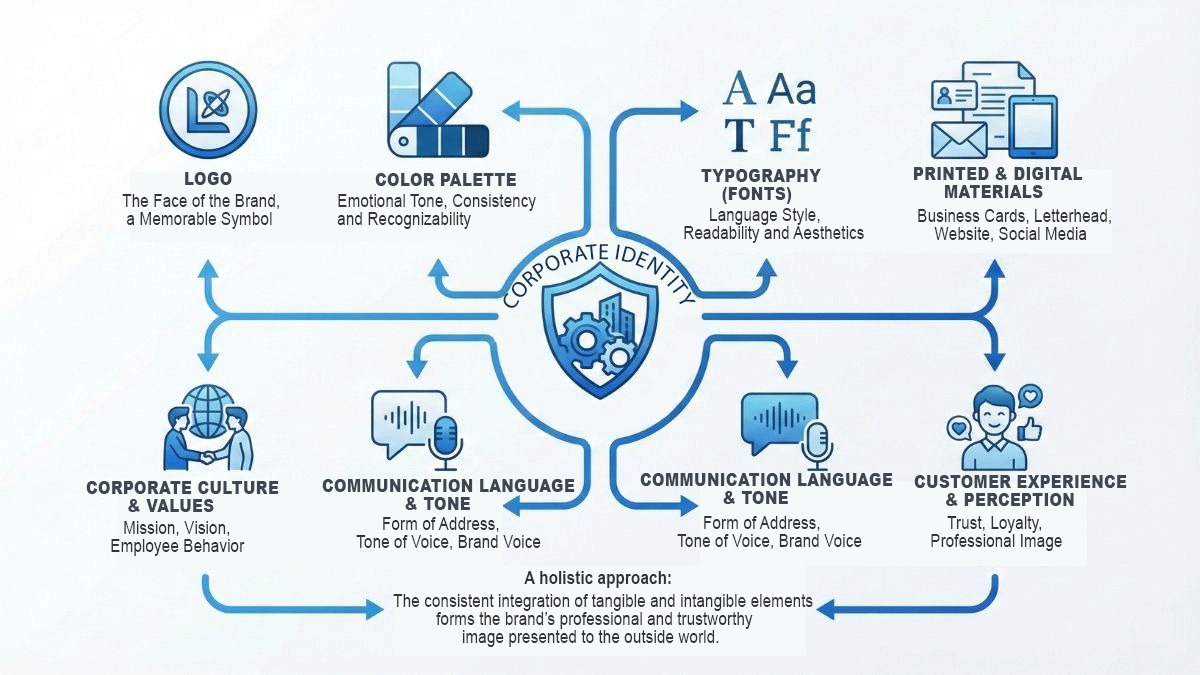
Corporate identity design is the art of transforming a company’s vision, mission, and values into a tangible visual language. This concept goes far beyond a brand’s logo and spans a wide range—from business cards to websites, from packaging design to social media posts. The first impression formed in the consumer’s mind and the lasting impact that follows are entirely the result of this strategic design process.
These efforts, which can be described as the way a brand expresses itself, clearly reflect the institution’s character and stance. Companies that want to differentiate from competitors and hold a unique position in the industry communicate silently yet powerfully with their target audiences through distinctive colors, typography, and graphic elements. A professionally constructed identity builds trust with customers while also documenting the company’s seriousness and respect for its work.
Representing strategic cohesion beyond design, this structure ensures the brand speaks the same language on every platform. Whether in digital environments or physical materials, consistent visual presentation is one of the cornerstones of building brand loyalty. Every visual touch carries the institution’s signature, and over time, this signature becomes a symbol of quality and stability in the eyes of consumers.
Isn’t a Logo Enough? Differences Between Corporate Identity and a Logo
When building a brand, focusing only on a symbol is like putting a roof on a building without laying the foundation. A logo is the most recognizable face of your business, but it cannot tell the whole story on its own. Corporate identity, on the other hand, is a comprehensive system that represents the character, tone of voice, and stance behind that face. Continuity and consistency in communication with your customers are not achieved through a stylish emblem alone, but through a holistic visual world that supports that emblem. The true strength that separates your business from competitors lies in correctly distinguishing and integrating these two concepts:
- A logo is a graphic sign that enables recognition; corporate identity is the strategic guide that defines how, where, and under which rules this sign is used.
- A logo design is typically a single visual work, whereas identity design covers a broad application area—from business cards to websites, from invoice templates to vehicle wraps.
- The logo is the first element that captures attention; corporate identity manages the professional perception that turns that attention into trust and loyalty.
- Logos may undergo minor revisions over time, but corporate identity is a consistent structure that the brand maintains for years and speaks the same language across all platforms.
For your brand to leave a lasting mark in the industry, every part must serve the whole flawlessly. A well-drawn symbol alone may lose its impact over time if it is not backed by a strong system, or it may diminish brand value when used incorrectly on unsuitable backgrounds. Any business seeking a professional image should see its logo as a starting point and carefully construct the entire visual universe around it.
What Does a Professional Corporate Identity Bring to Your Brand?
In the business world, first impressions are often the most critical moment that determines the fate of a deal. A well-designed visual world makes your brand’s seriousness and quality felt within seconds. When customers or business partners see a structure that presents a consistent stance, they believe the product or service you offer is prepared with the same level of care. This sense of trust is your silent yet most effective reference that moves you one step ahead in highly competitive markets.
A professional face you invest in is not merely an aesthetic concern; it also delivers tangible benefits that directly serve your business growth goals:
- It increases brand loyalty, making it easier for customers to choose you again.
- It strengthens your position in the industry and helps you stand out clearly from competitors.
- It creates consistency in your marketing efforts, helping your advertising budget be used more efficiently.
- It strengthens employees’ sense of belonging and boosts motivation.
- It raises your company’s market value and perceived prestige.
These visual steps taken toward institutionalization are not a simple expense item, but a strategic investment in the future. A well-constructed identity not only supports your brand today, but also enables it to enter tomorrow’s growth opportunities in the most prepared way. That prestigious image embedded in consumers’ minds becomes your business’s greatest capital in the long run.
Which Design Elements Does Corporate Identity Work Include?
Corporate identity is a systematic whole of all parts that form the visible face of a brand. This comprehensive process is not limited to basic graphic elements; it manifests at every point where the business communicates. A wide range—from business cards and building facades to digital signatures and promotional products—serves as tools that reflect the brand’s character. Ensuring that each piece is consistent with the others is vital for protecting a professional perception and achieving memorability.
The core building blocks that make up a brand’s visual world include:
- Logo design and its usage variations on different backgrounds
- Corporate color palette and secondary color codes
- Brand-specific typefaces and typography rules
- Printed materials such as business cards, letterheads, and DL envelopes
- Templates for invoices, delivery notes, and collection receipts
- Email signatures and digital presentation files
- Staff uniforms, ID badges, and workwear
- Vehicle wraps, signage, and directional boards
- Promotional products and packaging designs
- A corporate identity guideline (Brandbook) containing all rules
All of these elements are designed to create a unique and consistent structure, like the brand’s fingerprint. Speaking the same visual language—from a logo on a single pen to a sign on a massive building facade—builds unshakable trust in the consumer’s mind. Although the pieces may appear independent, they all serve one purpose: telling the brand’s story fully and powerfully.
The Power of Design in Building Trust in the Customer’s Eyes
The human brain processes a visual within seconds and forms a definite judgment about it. When consumers first come into contact with a business they have not experienced before, they directly associate the aesthetic quality they see with the quality of the service to be delivered. A carefully prepared, modern, and professional appearance is the clearest proof of the company’s respect for its work. The credibility gained at first glance is the most effective psychological key that breaks purchasing barriers.
A consistent design language tells customers that the brand is in control of its processes and has corporate discipline. Seeing the same standards across every touchpoint—from digital platforms to physical materials—eliminates doubt and uncertainty. Presenting a clear, cohesive structure free from clutter reinforces the perception that the business is established and reliable. Users feel safe forming commercial relationships with companies that maintain stability in their visual world.
A presentation built with aesthetic intelligence significantly increases the perceived value of a product or service. In markets where competition intensifies, standing out among competitors offering similar solutions depends on how you visually package your quality. Customers always perceive a brand that has invested effort in design as more competent and prestigious. Good design not only looks pleasing, but also turns the brand’s leadership claim and professionalism in its sector into a tangible reality.
Why Is Brand Consistency the Key to Success?
Brand consistency is a business delivering the same voice, image, and message across all communication channels. In a complex world, consumers tend to gravitate toward structures they recognize and know. Visual languages that constantly change or conflict with each other make it harder to stick in memory and create perception fragmentation. Maintaining a standard stance across every channel maximizes recall and embeds the brand’s identity into the target audience’s mind.
Trust is directly tied to stability. Customers want to see an organization that knows what it is doing, is decisive, and always delivers the same quality standard. Seamless unity across everything—from the website and social media accounts to product packaging and in-store visuals—proves the company’s professionalism. This disciplined approach strongly conveys that the business is not only in control of its appearance, but of all its processes.
At the foundation of long-term success and financial growth lies an unshakable image that has been built over time. A consistent brand does not need to reintroduce and re-explain itself in every marketing activity. This uninterrupted and clear bond with the target audience increases brand loyalty and significantly speeds up purchasing decisions. Rising to a leadership position in the industry depends on the echo of a single, strong, and unwavering voice across all platforms.
What Should Be Considered When Creating a Successful Corporate Identity?
A successful design process must rest on a strategic foundation before aesthetic concerns. Graphics that look good but do not reflect the spirit of the brand lose impact quickly and can cause the institution to communicate the wrong message. Deeply analyzing the target audience, industry dynamics, and the company’s future vision determines the correctness of the steps to be taken. Every line, color tone, and typeface must have a logical reason and a strategic purpose that serves the brand’s story.
The following core criteria play a decisive role in building a visual identity that carries a brand into the future:
- Originality: The design must clearly differentiate from competitors and reveal a brand-specific, inimitable character.
- Simplicity and Memorability: Clear, understandable forms free from complex details settle faster in consumers’ minds.
- Applicability: The identity must be usable without distortion across every surface—from digital screens to large signage, from pens to vehicle wraps.
- Fit for the Target Audience: The chosen tone and visual language should align with the expectations of the brand’s demographic audience.
- Timelessness: Rather than following temporary trends, the design should maintain relevance and avoid aging even years later.
- Color Psychology: The emotional effects of colors should be analyzed correctly to support the sense of trust, energy, or seriousness the brand wants to convey.
Mistakes made in this critical process or rushed decisions can lead to costly restructuring needs in the future. Design stages managed with a professional perspective leave a strong legacy the institution can use for years. Any business that wants to be lasting and gain respect should view identity building not as an expense, but as the most valuable and concrete investment in its future.
Is Corporate Identity Design an Expense or an Investment?
Although design spending often appears as an expense line in financial statements, this perspective is a major misconception that shapes a brand’s future. Corporate identity is strategic capital that builds not only a company’s visual face but also its market perception, credibility, and reputation. The professional stance that settles in consumers’ minds elevates the perceived quality of a product or service and becomes one of the strongest factors that triggers sales. Therefore, the budget allocated to this process is not money that disappears—it is a tangible asset that returns by multiplying brand value.
A well-constructed visual world increases the efficiency of marketing and advertising activities, creating a leverage effect that reduces costs in the long term. When consumers encounter a consistent and trustworthy brand, they make purchasing decisions much faster and develop loyalty. You do not have to explain yourself from scratch every time; your logo, colors, and stance speak for you. This recognition and prestige is the only power that allows you to be preferred without entering price competition in highly competitive markets.
When a brand’s financial valuation is conducted, its intangible assets and brand value often create a much higher multiplier effect than its physical assets. Amateur steps taken today in the name of saving on design can cause the brand to fade and require rebuilding later with much larger budgets. For visionary businesses that want to be a lasting player and leave a multi-generational legacy, corporate identity is unquestionably the strongest foundation laid for the future.
When Should Brands Go for a Corporate Identity Refresh (Rebranding)?
During a company’s growth journey, its goals, vision, and the audience it addresses may change over time. When the current visual language can no longer support this new strategic direction, or when it falls behind modern design dynamics in the industry, the need for renewal becomes evident. Especially in cases of mergers, goals to enter global markets, or radical service changes, the old identity becomes insufficient to carry the brand forward. This change is a necessary evolution that keeps the brand current, removing an outdated image in consumer perception and projecting a dynamic energy.
Periods when corporate reputation has been damaged, or when the brand wants to leave behind negative perceptions from the past and open a clean new chapter, also present a critical opportunity for this transformation. However, this process is not a random decision driven by boredom; it is a strategic response to shifting market demands. In an environment where competitors present a much stronger and more innovative visual stance, staying silent is equivalent to losing market share. A shell change managed at the right time and professionally not only gives the brand a fresh look, but also delivers the strongest message to the target audience that it is still powerful and ready for the future.


Do Comment