
The Fundamental Steps of Software Development
The fundamental steps of software development comprise the planning, analysis, design, coding, testing, deployment, and maintenance phases that turn an idea into a final product. This process is not limited to writing lines of code at a computer; it requires meticulously following a systematic cycle to solve a problem or meet a need. Teams that aim to deliver a successful digital product move forward by adhering to this universal roadmap—known as the software development life cycle—and prioritize quality at every stage of the project.
Everything starts with a detailed requirements analysis, and this phase ensures the project rests on a solid foundation. After determining what will be built, who the target audience is, and which technologies will be used, the architectural design process comes into play. The coding phase is the “kitchen” where the plans on paper are brought to life, but validating functionality is just as critical as writing high-quality code. Testing phases help identify potential issues before users do, guaranteeing the product’s stability and reliability.
Finally, go-live and maintenance processes keep the software up to date like a living structure. This disciplined approach prevents chaos in the development process and enables efficient use of budget and time resources. Following this structured methodology instead of writing code randomly both simplifies developers’ work and ensures the resulting application is sustainable, scalable, and user-friendly.
Starting the Project Right: Planning and Requirements Analysis
The success of software projects is determined in the preparation phase—before a single line of code is written. At this stage, clarifying the project vision and identifying the real needs of the target audience are vital. Because rushed starts often lead to bottlenecks later, a detailed feasibility study is essential. Assessing the current situation and defining the desired outcome with concrete data makes it easier for the entire team to focus on the same goal and minimizes wasted resources.
The requirements analysis process requires defining the application’s functions and technical infrastructure completely and accurately. Combining the client’s or project owner’s ideas with technical feasibility prevents future scope drift. Which platforms will be supported, data security standards, and integration requirements should be documented at this step. Every finding makes cost and timeline estimates far more realistic.
The comprehensive roadmap created in light of these findings functions as the project’s constitution. The timeline, budget management, and resource allocation are managed by staying faithful to this plan. Anticipating potential risks in advance and preparing alternative scenarios plays a critical role in ensuring sustainability. Starting with solid planning transforms what looks like a complex development process into a manageable and transparent operation.
A Critical Step Before Coding: Design and Prototyping
Design work performed before coding is the first phase where the project begins to take shape. Just as you cannot construct a building without an architectural plan, code written without a defined interface and experience design can create chaos later. In this process, not only how the application will look visually is clarified, but also how users will move through the system. Thanks to wireframes and mockups, functionality can be tested before high development costs arise, and potential problems are detected early.
The components of a successful design process are as follows:
- User Flow Diagrams: Mapping the journey users will take within the application and outlining the process steps.
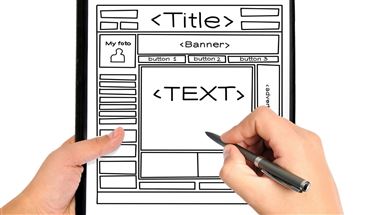
- Wireframe Creation: Building the design skeleton and planning the placement of elements such as buttons and menus.
- UI (User Interface) Design: Selecting the color palette, typography, and visual elements with aesthetic consistency aligned with the brand identity.
- UX (User Experience) Architecture: Ensuring users reach their goals with the fewest clicks and in the easiest way.
- Interactive Prototyping: Making the designs clickable so they can be tested like a real application.
Approved prototypes serve as a clear guide for the software team and eliminate uncertainties in the development process. Every logic issue resolved during design prevents problems that developers would otherwise spend hours addressing later. Since clients or stakeholders experience the product in its closest-to-final form at this stage, the risk of surprises at the end is minimized. A well-grounded design process is the key to a faster and more efficient coding phase.
The Stage Where Ideas Turn Into Code: The Software Development Process
The roadmap prepared during the design and planning phases is combined with technical expertise at this stage and becomes a working product. Developers take on roles across disciplines commonly known as front-end and back-end development to build the project’s structure. It is essential not only that the interfaces users will see appear flawlessly in a browser or on mobile, but also that the database architecture behind the scenes is built on solid foundations.
Ensuring the code is maintainable is vital for the project’s future. Choosing a modular and readable structure over complex and disorganized code blocks significantly simplifies future updates. Developers adhering to defined standards within the team preserves the project’s integrity and prevents technical debt from accumulating.
In modern software processes, using version control systems is mandatory. These systems enable multiple developers to work on the project simultaneously and allow changes to be merged safely. The ability to roll back in case of an error provides the development team with a strong safety net and supports uninterrupted workflow.
To ensure the application runs efficiently, code optimization is emphasized and unnecessary resource consumption is avoided. Third-party service integrations and API connections are completed in this phase, enabling the system to communicate with the outside world. When coding is complete, the result is a functional, living digital product that is ready for testing.
Testing and Quality Assurance Methods for a Flawless Experience
In the software development process, completing the code does not mean the project is finished—on the contrary, the testing phase begins, where the product is refined. This stage is a critical filter for measuring how the application behaves under different scenarios and removing issues that could harm the user experience. Details overlooked by developers or the system’s behavior under heavy load are examined meticulously by professional testers. The goal is not only to find bugs, but to ensure the application delivers the promised performance and security in full.
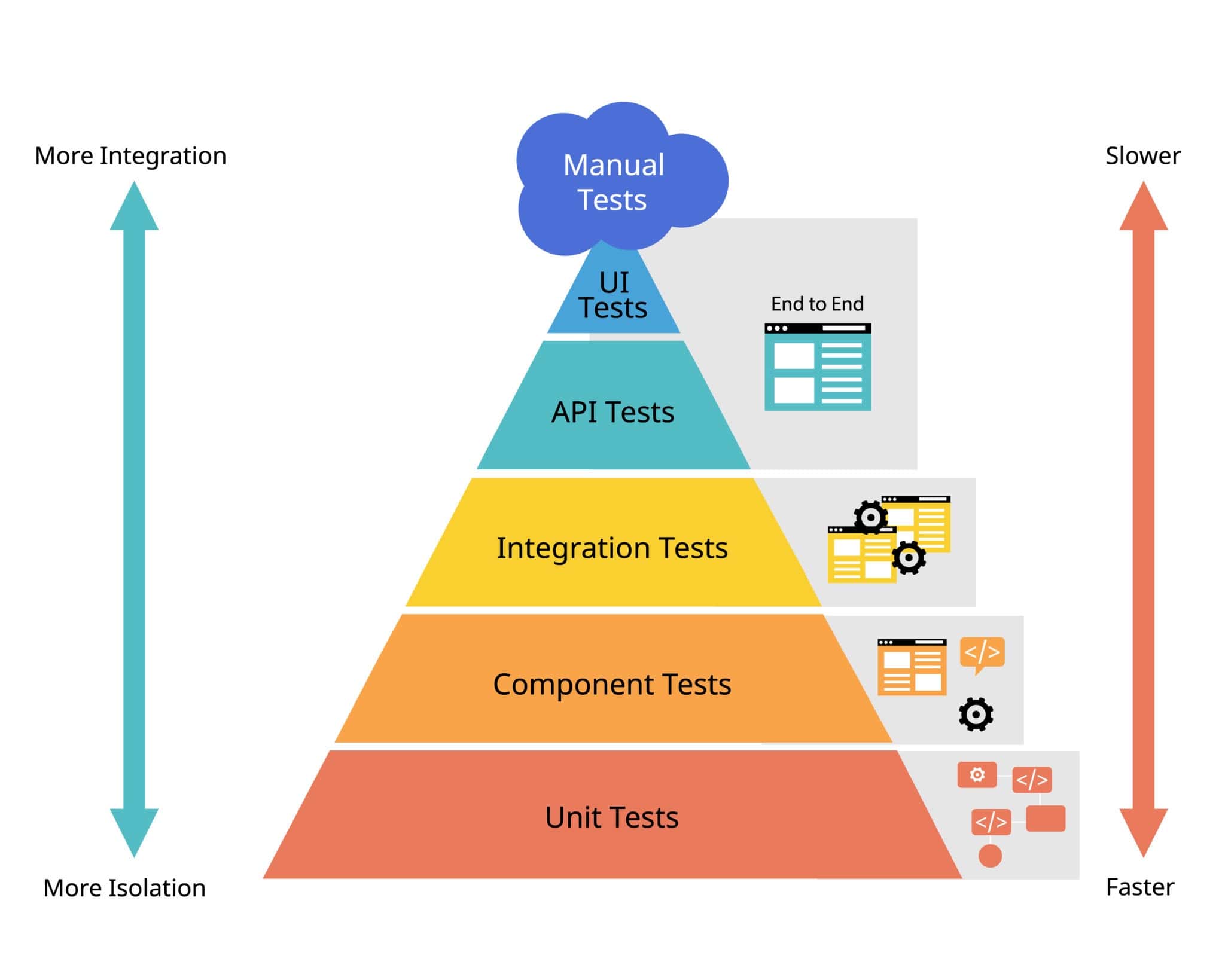
The main testing methods applied for impeccable software are as follows:
- Unit Testing: Developers verify whether the smallest pieces of code work correctly in isolation.
- Integration Testing: Confirming that different modules or services communicate with each other properly.
- User Acceptance Testing (UAT): Validating with real user scenarios that the software meets the intended needs.
- Performance and Load Testing: Measuring whether the system can operate without slowing down while thousands of users perform actions simultaneously.
- Security Testing: Identifying and closing vulnerabilities against data breaches or cyberattacks.
A comprehensive quality assurance process prevents crises and loss of reputation after launch. Alongside manual checks, automation tools increase efficiency by detecting even the smallest issues that the human eye might miss. Delivering a stable release free of defects directly impacts brand credibility and makes it easier for users to adopt the product. A successful testing process is more than a technical requirement—it is the strongest assurance of customer satisfaction.
The Process Continues After Delivery: Maintenance and Updates
Launching software is not an end, but the beginning of a living cycle. Because technological infrastructures in the digital world constantly change, the developed application must keep pace. Operating system innovations, browser updates, or server-side version changes can cause a system that once worked flawlessly to produce errors over time. Maintaining the initial performance and stability requires regular technical monitoring as a professional necessity.
Fighting security vulnerabilities is the most critical link in the maintenance process. Because cyber threats evolve day by day, keeping security defenses up to date and applying necessary patches on time is vital. In addition, making improvements based on feedback from active users is unavoidable. Interface refinements and integrating new features to enhance user experience help the application maintain its competitive strength.
Neglecting maintenance eventually turns into a complex problem known as technical debt. Small issues left unaddressed can later create costs so large that the system must be rewritten entirely. Software supported by regular updates, however, does not lose value even after years and continues to serve the organization. Efficient use of resources and ensuring operational continuity are only possible with a disciplined maintenance strategy.
Commonly Confused Concepts: The Difference Between Agile and Waterfall Models
In the software development world, one of the most fundamental decisions that determines a project’s fate is choosing the management methodology. Agile and Waterfall models—often compared in the industry—represent two different mindsets shaped by project needs. One structures the process as a step-by-step flow that is difficult to reverse, while the other provides flexibility in the face of change and uncertainty. Selecting the right approach is a strategic move that directly affects the entire life cycle of the project, from budget control to delivery timelines.
The main differences between these two approaches are as follows:
- Progress Structure: In the Waterfall model, phases flow linearly from top to bottom and you do not move to the next stage until the current one is completed; in Agile, development progresses iteratively in small increments.
- Adaptation to Change: While Waterfall takes a rigid stance in projects where scope is fixed from the start, Agile quickly adapts to new ideas and customer requests that emerge during the process.
- Customer Interaction: In the Waterfall model, the customer is typically involved only at the beginning and at delivery; in Agile, feedback is collected at the end of each iteration to shape the product.
- Risk and Defect Management: In Waterfall projects, major issues are often discovered late, during the final testing phase; Agile enables early risk detection and immediate intervention thanks to short work cycles.
Which model to apply depends entirely on the nature of the project and the team’s working culture. In startup projects with high uncertainty that must adapt to market conditions, the freedom offered by Agile provides a major advantage. Conversely, in projects with clearly defined requirements and strict regulatory constraints—such as banking or defense—Waterfall discipline can offer a safer roadmap. Success does not come from applying a methodology blindly, but from choosing the approach that best fits the project’s character and using it efficiently.
The Most Common Mistakes in the Software Development Process
When software projects fail, the root cause is usually not a lack of coding knowledge, but strategic mistakes in process management. Teams getting lost in technical details and missing the big picture, or building schedules on unrealistic goals, are common in the industry. Such management weaknesses not only lead to budget overruns but also cause motivation loss within the team, paving the way for the project to be shelved entirely. The path to success is not only about using the latest technology, but about learning from past mistakes and following a disciplined roadmap.
The main mistakes that disrupt development and drive projects into dead ends are as follows:
- Insufficient Requirements Analysis: Starting to code without fully understanding what the customer or the market wants leads to a weak foundation and wasted resources.
- Scope Creep: Adding new features continuously without adhering to the plan scatters the focus and causes delivery timelines to extend uncontrollably.
- Postponing Testing: Leaving debugging and quality assurance to the end results in costly rework and a low-quality release.
- Ignoring User Feedback: Making decisions solely from a developer perspective while neglecting the needs and experience of the user base harms product–market fit.
- Accumulating Technical Debt: Writing low-quality code and neglecting optimization to ship quickly can make long-term sustainability impossible.
To avoid these pitfalls, it is essential to build a working culture that centers transparency and communication at every stage of the project. Accepting errors as a natural part of the process and identifying them early makes crisis management far easier and less costly. Experienced teams anticipate risks before development even starts, take precautions, and establish a flexible structure to adapt quickly to changing conditions. Ultimately, a high-quality software product is not created only with well-written code, but through a consciously managed development process.



Do Comment