
Being visible in the digital world is critical to the success of every business. SEO (Search Engine Optimization) services help your brand reach the right target audience and rank higher in search engines. They not only make it easier for users to access the information they need, but also enable you to build a strong connection with your potential customers. A solid SEO strategy not only increases your organic traffic, it also strengthens your brand awareness.
With the wide range of services we offer—from keyword research to content optimization, from technical SEO implementations to backlink strategies—we help you stand out in a highly competitive online market. SEO is not just a series of technical tasks; it is a comprehensive approach that prioritizes user experience and makes your brand more visible. With years of experience, we quickly adapt to changes in search engine algorithms and apply the most up-to-date and effective methods.
With our customized SEO solutions, we analyze your target audience’s search habits and develop strategies accordingly. By tracking your performance at every step, we ensure a continuous improvement process. By working with us, you can position your brand more strongly in the online world and achieve long-term success. The first step to getting ahead of your competitors in the SEO landscape is to contact us.
Professional SEO Service in İzmir
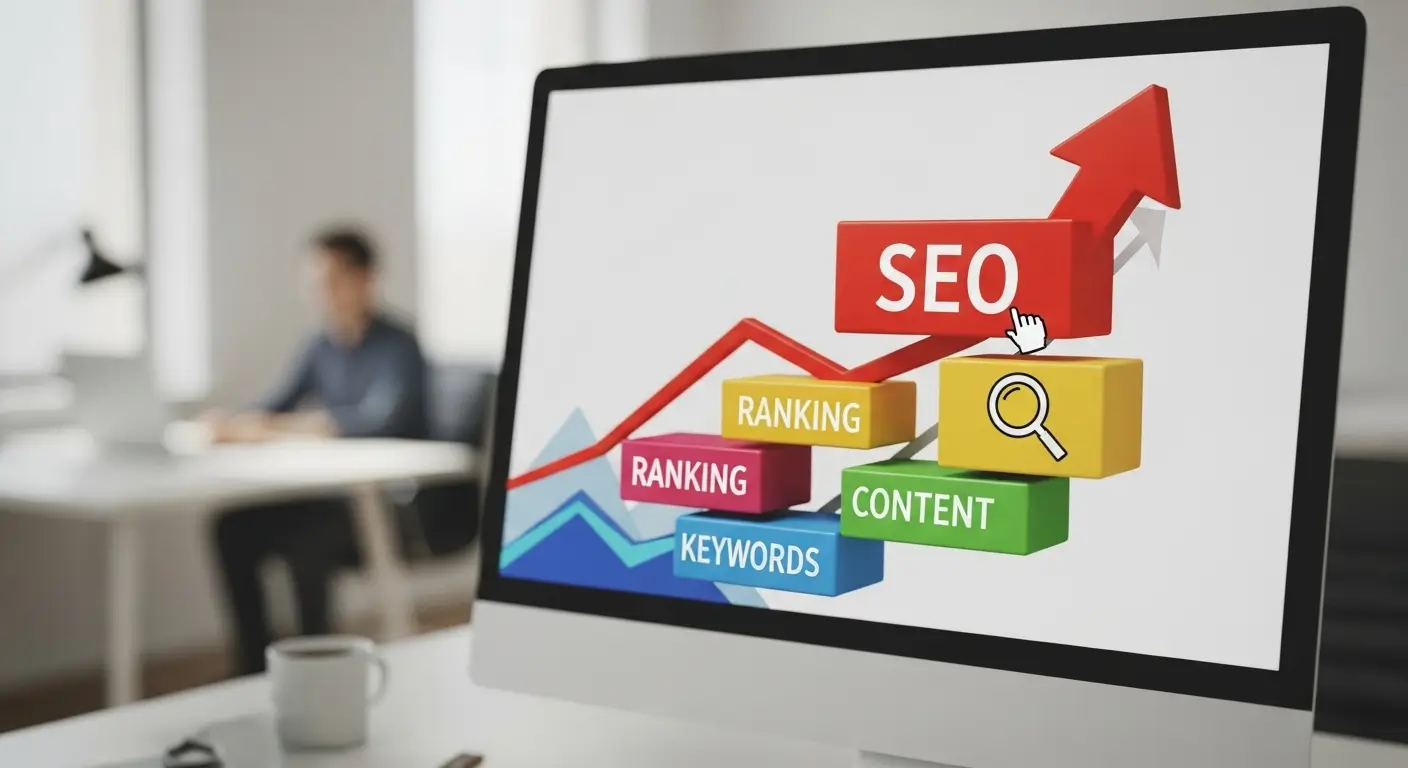
We offer professional SEO services to increase your business’s digital visibility in İzmir and help you rank at the top on Google. With SEO efforts built on the right strategies, your website will stand out for the keywords your target audience searches for. This not only attracts more visitors, but also helps you reach the right audience and increase your customer conversions.
By developing SEO solutions tailored to İzmir-based companies, our agency supports you in getting ahead of your competitors in your sector. We strengthen your online success through technical SEO, content optimization, backlink efforts, and local SEO strategies. As a result, your brand becomes more visible in the digital world both locally and nationally.
What is SEO?
Take your website to the top with Search Engine Optimization
Targeted Keywords
We identify the most effective keywords for your business and optimize your content around those terms.
Technical Optimization
We optimize site speed, mobile compatibility, and technical SEO factors to help search engines understand your site better.
Sustainable Results
For long-term success, we increase your organic traffic through continuous analysis, reporting, and improvement efforts.
Improve Your Rankings with SEO
The Advantage of SEO in İzmir
SEO efforts in İzmir help businesses gain a stronger position in the digital space. A website prepared with the right optimizations ranks higher in search engines and easily attracts the attention of potential customers. This increases brand awareness while delivering a noticeable rise in sales and conversions.
Key advantages of SEO in İzmir:
- Reaching the local target audience faster and more accurately
- Getting ahead of competitors in Google search results
- Reducing digital advertising costs in the long run
- Building trust by increasing brand awareness
- Generating continuous and sustainable organic traffic
In a highly competitive city like İzmir, leveraging the advantages of SEO offers businesses a major opportunity. A website built with effective SEO strategies helps you win not only today’s customers but also tomorrow’s, and moves you one step ahead of your competitors.
What is the Relationship Between SEO and Digital Marketing? Does SEO Affect Sales?
The relationship between SEO and digital marketing is one of the cornerstones of modern businesses’ online success. While digital marketing covers various strategies such as social media, content marketing, and email marketing, SEO focuses on optimizing these efforts to ensure visibility and accessibility in search engines. SEO supports your digital marketing activities and makes it easier to reach potential customers. A strong SEO strategy helps you identify your target audience with the right keywords and deliver the right content to them.
SEO’s impact on digital marketing is directly related to increased organic traffic. As users research the products or services they need via search engines, SEO helps your site rank higher in search results. This not only attracts more visitors, but also increases the likelihood that users who visit your site will make a purchase. As a result, effective SEO strengthens your digital marketing strategy and contributes positively to your sales.
In addition, the long-term effects of SEO improve the efficiency of your digital marketing budget. Instead of achieving short-term results like other digital marketing methods, organic traffic generated through SEO becomes an ongoing source. Over time, as your visibility in search engines grows, your brand awareness also increases. This helps potential customers recognize and trust you, and therefore plays an important role in purchase decisions.
Naturally, the relationship between SEO and digital marketing is critical to your business’s online success. SEO increases the impact of your digital marketing efforts and directly contributes to your sales by boosting organic traffic and brand credibility. Today, an effective marketing strategy should center on SEO, build a meaningful connection with your target audience, and ultimately aim to grow your business.
What Are the Types of SEO? Which Ones Should Be Implemented?
SEO is generally divided into three main types: technical SEO, content SEO, and off-page SEO. Each type offers different strategies and techniques to increase your website’s visibility in search engines. Each has its own importance, and executing all of them together plays a critical role in achieving success in your digital marketing efforts. For example, technical SEO ensures your website is optimized structurally and technically, while content SEO provides high-quality, original content that attracts users. Off-page SEO strengthens your authority by improving your connections with other websites. If one of these types is neglected, the efficiency of the other efforts may be negatively affected.
Because SEO types are interconnected and interact with one another, it is important to build a comprehensive SEO strategy. For instance, if your technical SEO is weak, your content becomes less accessible to users, resulting in lower traffic and conversion rates. Similarly, without high-quality content, backlink strategies become ineffective. Therefore, to run a successful SEO program, you should implement all these types in a balanced way. Below you can find more information about the three main types of SEO.
1. Technical SEO
Technical SEO covers optimization efforts that help search engines better understand your website. This process includes structural features of the website, page speed, mobile compatibility, and URL configuration. Search engines use crawlers to index your site, and if your technical structure is not healthy, users may have difficulty accessing your website. For this reason, technical SEO strengthens communication between search engines and your website.
One of the most important elements of technical SEO is page speed. Users quickly abandon pages that load slowly, which leads to a high bounce rate. At the same time, mobile compatibility is also a critical factor, because today a large portion of internet users access websites via mobile devices. Strong technical SEO optimizes your website with all these elements in mind, improving user experience and boosting your rankings in search engines.
2. Content SEO
Content SEO aims to equip your website with valuable, informative, and original content for users. This type begins with keyword research and strategy. Identifying the right keywords helps you understand what kind of information users want to find through search engines. This allows you to align your content more effectively with your target audience. Successful content SEO not only increases your visibility in search engines, but also encourages users to stay on your site longer.
In addition, for content SEO to be effective, content must be updated regularly. Search engines prefer fresh and up-to-date content, which can put you ahead of competitors. Creating high-quality content is critical not only for SEO but also for strengthening your brand’s credibility. As users engage with interesting and informative content, their loyalty to your brand increases, which raises your conversion rates.
3. Off-Page SEO
Off-page SEO focuses on improving your connections with other websites to increase your website’s authority. In this process, earning high-quality and relevant backlinks is very important. Off-page SEO helps you demonstrate your credibility to search engines through links you receive from other sites. The more high-quality links you have, the stronger your authority becomes, and this positively affects your rankings in search engines.
To implement off-page SEO effectively, it is important to use strategic partnerships and effective content marketing methods. Guest blog posts, social media shares, and relationships built with other sites can help your off-page SEO efforts succeed. These links play a critical role not only for SEO, but also for increasing your brand’s visibility and reaching new target audiences. As a result, off-page SEO is an integral part of your overall SEO strategy and an important element that should be implemented together with other types.
How Does the SEO Process Progress?
The SEO process includes the steps required to make your website more visible in search engines and connect effectively with your target audience. This process covers a set of strategic approaches and technical implementations. A successful SEO program does not start only with keyword research; it also includes stages such as site analysis, competitor analysis, content optimization, and backlink building. Each step makes it easier to achieve your goals and increases the effectiveness of your SEO strategy. Considering constantly changing search engine algorithms and staying up to date is an indispensable part of the SEO process.
Successfully implementing the SEO process requires executing all these steps together and in a balanced way. Here are the main steps of the SEO process:
Keyword Research
Keyword research is one of the cornerstones of the SEO process. This stage helps you understand which words and phrases your target audience uses in search engines when looking for products or services. Identifying the right keywords directly affects how effective your content will be. At this stage, it is important to focus on long-tail keywords to understand user intent. Long-tail keywords help you face less competition by targeting more specific searches, which means higher conversion rates. In addition, using your keywords naturally in your content helps search engines understand your content better.
1: Site Analysis and Audit
A site analysis and audit allows you to evaluate how effective your current website is from an SEO perspective. Factors such as page load speed, mobile compatibility, site structure, and user experience are considered at this stage. A good site analysis helps you identify the strengths and weaknesses of your SEO strategy. Detecting and fixing errors on your website helps search engines index your pages more effectively. It also reduces bounce rates by encouraging users to stay on your site longer. During the site analysis process, obtaining detailed reports using Google Search Console and other analytics tools is critical for improving performance.
2: Competitor Analysis
Competitor analysis is an important step to understand other players in your industry. At this stage, you analyze which keywords your competitors target, which content strategies they use, and their backlink profiles. Identifying competitors’ strengths and weaknesses helps you shape your own strategies. In addition, understanding overall market dynamics helps you discover new opportunities. With the insights you gain from competitor analysis, you can develop content and strategies that better meet your target audience’s expectations.
3: Content Optimization
Content optimization is one of the most critical steps in the SEO process. At this stage, you optimize the content on your website using the keywords you have identified. Elements such as title tags, meta descriptions, and subheadings indicate to search engines what your content is about. In addition, it is important that your content is high-quality, informative, and user-focused. Creating content that engages users and helps them easily reach the information they seek improves your rankings in search engines. During content optimization, optimizing your visual and video content also enhances user experience and increases on-page engagement.
4: Backlink Building
Backlink building is an SEO strategy aimed at increasing links from external sources. High-quality and relevant backlinks increase your site’s authority in the eyes of search engines. At this stage, you can strengthen your backlink profile using methods such as guest blog posts, partnerships, and social media sharing. In the backlink building process, you should focus only on links from reputable and relevant websites; otherwise, you may encounter negative effects. It is also important to remember that backlink building is a long-term process; consistently acquiring links will increase your website’s visibility.
5: Performance Monitoring and Reporting
Performance monitoring and reporting is the final stage of the SEO process and allows you to evaluate the effectiveness of the work performed. At this stage, you can determine how successful your SEO strategy is by examining data such as traffic analysis, keyword rankings, and conversion rates. Tools like Google Analytics, SEMrush, and Ahrefs help you monitor performance and create detailed reports. Using the data you obtain, you can update and improve your strategy when needed. This continuous cycle is critical to ensuring long-term success of your SEO efforts.
What is SEO-friendly content?
SEO-friendly content refers to texts created in accordance with search engine algorithms that provide valuable and informative information to the target audience. The main purpose of this type of content is to rank higher in search engines by using specific keywords effectively and to attract the attention of potential visitors. SEO-friendly content aims to both improve user experience and capture the attention of search engines. When content is original, clear, and high-quality, it becomes easier for users to reach the information they are looking for, and it is also evaluated more positively by search engines.
There are many factors to consider when creating SEO-friendly content. First, target keywords must be identified correctly and included naturally within the flow of the content. Keywords should be used strategically in the title, subheadings, meta descriptions, and throughout the text. You can also stand out in more specific searches by targeting long-tail keywords. The quality, originality, and freshness of the content make search engines perceive your content as more valuable. In addition, supporting your content with visuals increases user interest and encourages them to spend more time on the page.
SEO-friendly content should have a structure that both responds to users’ needs and attracts the attention of search engines. Using user-friendly language, improving readability, and providing informative content are among the fundamental elements of creating SEO-friendly content. This process makes your content valuable not only for search engines, but also for real users. Therefore, creating SEO-friendly content becomes an indispensable part of your digital marketing strategy.
What is a backlink? Why is it important in SEO?
A backlink is a link that directs from one website to another. These links are considered an important evaluation criterion for search engines. Backlinks not only increase your site’s authority and credibility, but also make it easier for users to access specific content. Backlinks from high-quality and relevant websites signal to search engines that your site is a valuable and trustworthy source. Therefore, backlinks become one of the cornerstones of your SEO strategy.
The importance of backlinks in SEO is based on how influential they are for your website’s search engine rankings. Search engines treat backlinks as a form of voting; the more and higher-quality backlinks a site receives, the more valuable it is considered by search engines. For this reason, building backlinks is essential for creating an effective SEO strategy. Links from authoritative and industry-leading websites, in particular, increase your site’s visibility and make it easier to reach your target audience. In addition, traffic driven by backlinks can help users stay on your site longer and may increase your conversion rates.
Naturally, backlinks play a critical role as one of the core components of SEO in determining your site’s authority and credibility by search engines. Acquiring high-quality backlinks improves your search engine rankings and makes it easier to reach potential customers. For this reason, adopting a strategic approach to backlink building is highly important for increasing the success of your digital marketing efforts.
What are the differences between SEO and SEM (ADS)? Which one is more advantageous?
SEO (Search Engine Optimization) and SEM (Search Engine Marketing) are two core components of digital marketing, but each works with different strategies and goals. SEO focuses on improving organic search results, while SEM aims to gain visibility through paid ads in search engines. SEO relies on long-term strategies such as optimizing content, increasing backlinks, and improving user experience, whereas SEM relies on ads run with a budget to achieve immediate results. When used together, these two approaches can make your digital marketing efforts more effective.
The main differences between SEO and SEM relate to cost structure and the time it takes to see results. SEO may require time and effort initially, but in the long run it creates a sustainable source of traffic. Search engines reward high-quality, relevant content and enable users to find your site organically. On the other hand, SEM provides immediate visibility for targeted keywords. However, that visibility lasts only as long as your advertising budget continues. In other words, traffic gained through SEO remains ongoing thanks to organic rankings, while traffic generated by SEM disappears once the budget ends.
Which method is more advantageous depends on your goals and business model. If you want quick results in the short term, SEM offers a fast solution. However, if you are looking for a long-term strategy, focusing on SEO makes more sense. The most effective approach is usually a combination of both strategies. SEO increases your organic visibility over time, while SEM is an important tool for delivering instant visibility for specific campaigns. This way, you increase your chances of achieving your business goals both in the short and long term.
You can review the Google SEO projects we have completed to date.